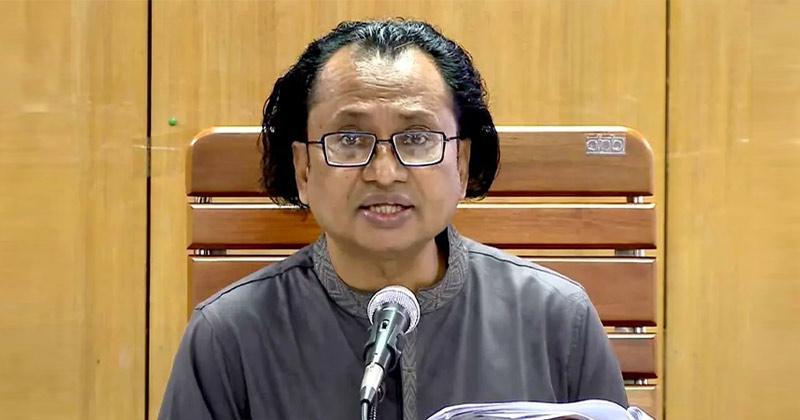
Prime minister’s information adviser Zahed Ur Rahman on Tuesday said that reconciliation with the Awami League was not a bad idea, but its leadership had yet to show the remorse and willingness required for such a process.
‘The basic condition of reconciliation is that the group, organisation or political party involved must acknowledge the crimes it committed and show repentance over them,’ he said at a weekly press briefing at the Bangladesh Secretariat.
Responding to a question about the government’s position, Zahed said discussions on reconciliation had taken place after August 5 and that a section of people still supported the AL, apart from its leaders and activists who had fled the country.
‘Reconciliation with these people or those who were actively involved with the Awami League is not a bad idea. It would have been good,’ he said.
Referring to South Africa’s Truth and Reconciliation Commission, he said acknowledgement of wrongdoing and repentance were fundamental to reconciliation.
He, however, stressed that this would not automatically end criminal liability.
‘Even after recognising the crime and showing repentance, there is a question of reconciliation, because recognising a criminal offence does not make it obsolete. Legal action has to be taken against it,’ he said.
Zahed said the government had expected the Awami League, activities of which are banned for committing atrocities during the July-August mass uprising, admit the wrongdoings after August 5, but instead the party and its leader had continued to blame and threaten the government.
He said deposed prime minister Sheikh Hasina’s statements had made it difficult for the BNP government to consider reconciliation.
Sheikh Hasina, who is currently in India, has been sentenced to death by the International Crimes Tribunal in a case concerning crimes against humanity committed during the July-August 2024 uprising.
Zahed also said that the government had directed all deputy commissioners to ensure uninterrupted supplies of liquefied petroleum gas in the open market and prevent its sale above the price fixed by the Bangladesh Energy Regulatory Commission.
He said the government was working to adjust LPG prices amid significant volatility in the international energy market.
‘Despite efforts to adjust prices, there have been complaints that LPG is not available at the adjusted rates in some places,’ he said.
The power, energy and mineral resources minister recently held an online meeting with deputy commissioners and issued instructions to ensure LPG availability at officially fixed prices, Zahed said.